domingo, 27 de noviembre de 2011

Week 12: Field Work in Tzopilja

On Monday morning, I woke up at 6:00 a.m. to go meet Marco Tulio at ECOSUR and we drove to Oxchuc to meet with Elena. After we met Elena, we drove to Tzopilja (the second community where I am conducting my study). We drove for about a half an hour over a bumpy, dirt road with lots of divots and rocks strewn throughout the way. Upon arriving in Tzopiljá, we started surveying women and their husbands. By the end of the day, we were able to complete surveys for 18 families. We returned to Oxchuc in the back of a pick-up truck with other men and women from Tzopilja. That night, I made more copies of my survey and had dinner with Elena, her husband, and two girls. Before going to sleep, I taught her daughters how to play “I spy”, which was a lot of fun.
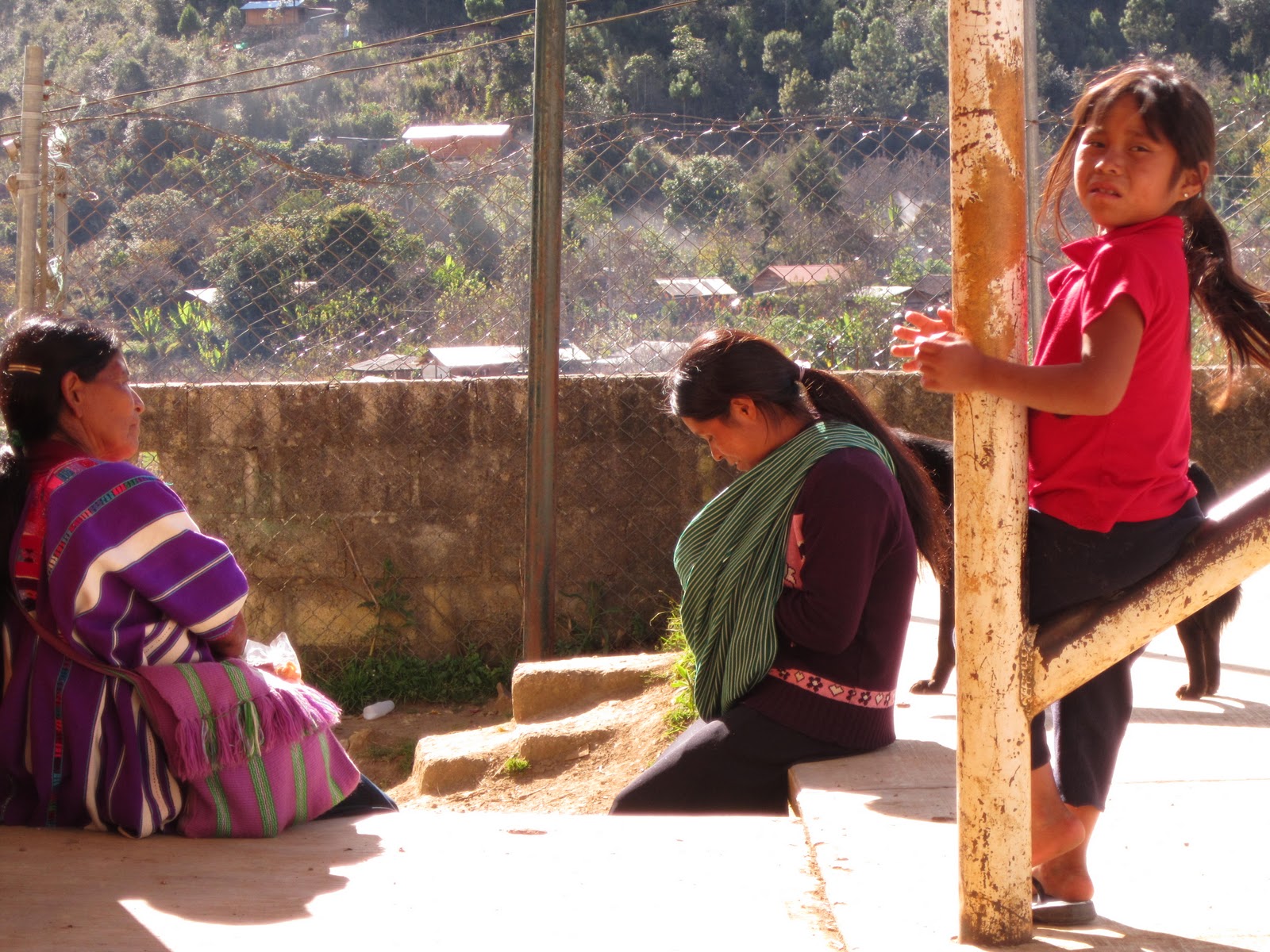
Women in Tzopiljá

Tuesday was an incredibly productive day: we left Elena’s house at 8 a.m. to return to Tzopilja. By the end of the day on Tuesday, we had surveyed 27 families and we had surveyed 10 more families by the end of the next day. While completing the surveys in Tzopilja, I noticed stark differences between the populations in Tzopilja and Mesbilja. The families were much bigger, and women had more children. One woman had given birth to ten children, but only five of them were still alive. There are also more people without access to health insurance and Seguro Popular.

Elena in Tzopiljá

On Wednesday night, I sat at Elena’s kitchen table while she helped her oldest daughter (Belen, 6 years old) with her homework. Belen had to look at a picture and describe what animals were in the picture (turtles, butterflies, frogs, etc.). We helped her with the spelling, and I even learned a few new words. After she had finished her homework, I taught Belen and her 4-year-old sister, Rocio, how to play Tic-Tac-Toe. Poor Rosio didn’t really understand how to play the game, but I tried to help her. Belen kept beating her sister and would make fun of her sister when she lost. In return, Rosio hit her sister in the face. But Belen just laughed. All of the kids I have met here are so much happier and easy-going than children in the states. I am really going to miss Elena and her family.

Elena administering my survey in Tzopiljá

On Thursday, we finished our field work in Tzopilja in the morning and Marco Tulio came to pick us up. When I returned to San Cristóbal in the afternoon, I worked on entering the data from my surveys into SPSS and caught up with some friends at ECOSUR who I hadn’t seen in a while because I have been in Oxchuc. When I arrived at salsa class on Thursday, I was pleasantly surprised to see Katy Tucker (one of the Georgetown students who was in San Cristóbal last year). She and Linda were the ones who had told me about the salsa class at Zirko, and it was great to be able to dance in the class next to her. She is currently living in Mexico City and working at an organization called ProMujer, but she says that she misses San Cristóbal and was excited to finally be back. It has been really fun having her here with us and being able to share stories.

Tzopiljá

After salsa class, Katy and I met up with Rahul and went with my friend Oliver to a restaurant to celebrate Thanksgiving. It was one of the best Thanksgiving dinner’s I have ever had: I ate chile relleno (stuffed pepper), rice, and tortillas. I think when I have a family of my own I am going to make chile relleno for Thanksgiving dinner (as a vegetarian, I don’t eat turkey). When we had finished eating, we saw some of our friends from the salsa class outside the restaurant. We all decided to go salsa dancing and I was very proud of Rahul because he was able to learn a lot of the steps. Overall, it was a very fun Thanksgiving – good friends, good food, and lots of salsa J


Me in the back of a pick-up truck

On Friday, Rahul, Katy and I went to ECOSUR. While Katy met with Rosario and Dr. Ochoa about the possibility of publishing her study from last year, I worked more on entering the data from my surveys into SPSS. It takes me about an hour to enter in the data for five women (and their husbands), so it has been a tedious process. I am hoping to be done capturing the data by next week so that I can start the data analysis.

Belen (Elena's daughter) and her cousin

After ECOSUR on Friday, Katy and I went to go see my friend Oliver play guitar in a café (while Rahul went on a date with a girl from ECOSUR!). After dinner, we went to Zirko and met up with our friends for a fun night of salsa dancing.

Elena helping Belen with her homework

On Saturday, we all woke up late and went to go eat breakfast at a café near our apartment. At breakfast, Rahul and I talked with Katy about the drug situation in Mexico. It was interesting to hear her perspective because she has been in Ciudad Juarez (near the US border) and has friends that work there, including a writer. One of the reasons why Ciudad Juarez is so dangerous is because there is more than one drug cartel fighting over territory, as opposed to other states in Mexico with only one drug cartel that controls the land and the market. One of the things that may improve the safety and the drug situation at the border is if drugs were legalized in the US, because then there may be more legal regulation. However, it seems unlikely that that will happen anytime soon.

Rocio (Elena's daughter) trying on her glasses

I stayed at the café where we had breakfast and worked more on entering the data from my surveys on Saturday afternoon. At night, Rahul and I went to meet Katy and her old salsa partner, Carlos, at the café were Oliver plays guitar. We laughed a lot as we listened to Carlos give Rahul advice for his next date with the girl from ECOSUR. After Oliver had finished playing in the café and we had finished laughing at the Mexican relationship advice, Rahul and I went to eat and then to watch the salsa dancers at Zirko.

Rocio and Belen playing Tic-Tac-Toe

We slept late again on Sunday and went to breakfast. In the afternoon, Katy and I went shopping around San Cristóbal. I started my Christmas-present shopping and found some really beautiful pairs of earrings made of amber, jade, and quartz. We also got some delicious hot chocolate and cake. Overall, I had a great afternoon with Katy. It is hard to imagine leaving this place – I keep thinking about when aI am going to come back here.


Paco, Elena, Katy and Rahul outside of ECOSUR

Me and Oliver at Zirko

domingo, 20 de noviembre de 2011

Week 11: Field Work in Mesbilja (Part II)

On Monday, I bid farewell to my parents at the bus station in San Cristóbal and then hopped in a combi to Oxchuc. When I arrived in Oxchuc, I met Elena’s husband and her niece, Marlen. Because Elena was working with Rahul on Monday, I went with her niece to the first community I am working in (Mesbilja) to let them know that Elena and I would be coming back on Tuesday to finish our field work there. When we arrived in Mesbilja, we looked for the President of the Health Committee at the Centro de Salud, but it was closed (as usual). We decided to go to his house, which turned out to be about an half hour walk from the Centro de Salud, across fields and rivers. When we finally arrived at his house, we were greeted by a barking dog. Luckily Jacobo (the President of the Health Committee) shooed the dog away and invited us into his home. We gave him a list of the families that we still needed to interview and asked him if we could come back in the next three days to finish our field work. He agreed, and offered us to have some pumpkin soup with his family. His wife and daughter-in-law (with her baby on back) spoke to Marlen in tseltal while we ate our pumpkin soup. When we had finished, we trekked back to where there were cars waiting to take people back to Oxchuc. After arriving back in San Cristóbal, I went to go make copies of my survey and spent a few hours in a café making packets and stapling the surveys.

Elena administering my survey in Mesbilja

On Tuesday, I woke up at 6:00 a.m. and took another combi to Oxchuc. I met Elena at her little store and then we took a car to Mesbilja. We had a list of people that we needed to interview and we spent most of the day walking from house to house. One man offered us bananas and another man and his wife gave us a bag of chayotes to take with us. We also met a local partera (midwife) in the town. Although most of the surveys were conducted in tseltal, it seemed to me as though the people were incredibly receptive to our study and were keen to offer their opinions. We took a car back to Oxchuc around 4:00 p.m. and went to Elena’s house. Her family has been incredibly kind towards me and the food that Elena cooks me is incredible. Her kids are also adorable.

Elena surveying one of the husbands

On Wednesday, Elena and I woke up early and went back to Mesbilja for our second day of surveying. We were able to accomplish quite a lot – by the end of the day we had finished surveying 18 families (for a total of 60 families in Mesbijla). Elena and I also talked to one of the nurses that works in the Centro de Salud. Many of the people we have been surveying have been saying that the Centro de Salud is not open when they need it and that there is not ‘good medicine’ at the Centro de Salud. Also, some women have said that the reason they do not go to all of their prenatal care check-ups is because the health personnel is a man. One pregnant woman said that although she had received information about risk signs during pregnancy at the Centro de Salud, it was not in her local language (tseltal). I decided that it would be a good idea to hear the perspective from one of the people that works at the Centro de Salud. We learned that there are 3 nurses that work at the Centro de Salud (2 women and 1 man) and that only one speaks tseltal. There is also a female doctor that comes about once a month from San Cristóbal. The nurse told us that the Centro de Salud is open Monday to Friday from 8:30 – 3:30 (which seems strange, since it has only been open twice in the six weekdays that me and Elena were in Mesbilja). We asked what happens if a woman is giving birth in the Centro de Salud and has a complication. They told us that the woman and her family have to pay for the transport to a hospital since the Centro de Salud is not equipped to handle obstetric complications or perform cesarean sections. If the woman and her family cannot pay for the transport, they can borrow money from the Health Committee and pay them back when they receive their check from the Oportunidades poverty alleviation program. We also asked if the information the women received during prenatal care was in their local language and the nurse replied that almost all the women speak Spanish. This may be true, but I can imagine that it would be easier for the women to understand if they were given the information in their local language (tseltal). According to the nurse, the main problem is that women get pregnant too young and they have too many children.

Mesbilja, Oxchuc

On Thursday, Elena and I returned to Mesbilja to finish interviewing the remaining families. We also gave the Health Committee five bags of bread rolls and a package of soft drinks to thank them for their help and support during our project. A drive from ECOSUR picked us up around 11:00 a.m. and we drove to the second community where I will conduct my study, Tzopiljá. When we arrived, there was a giant government truck with a slogan that said “eradicating child malnutrition” and there were people unloading nutritional supplements outside of the school. Mothers and their children lined up to receive the nutritional supplements. We found one of the promotores de salud who we had talked to the last time we went to Tzopilja. We gave her a list of families that we were going to interview and asked her if it would be OK if we came back on Monday to interview the families. I hope that the people in Tzopilja will be as receptive to our study as the families in Mesbilja. I returned to San Cristóbal on Thursday night and went to salsa class, which I had really missed while doing field work!

The road to Mesbilja

On Friday, I returned to ECOSUR. One of the main problems I have been having with my study is calculating the sample size. Dr. Ochoa told me that because Mesbilja has a population of over 1,000, I should survey 60 families and that I should survey 40 families in Tzopilja (because it has a population of between 500 – 1,000 people). However, I am confused about where the numbers ‘60’ and ‘40’ came from and I do not know exactly how many women I need to survey. I have tried to have various people at ECOSUR help me with this problem, but I have had no luck (either they are not available or they do not know). This week, I finally e-mailed Dr. Huang about the problem. Originally, I was going to calculate the sample size using an expected frequency statistic from a similar study conducted in Guatemala (which found that in one year, 44% of women had heard of ‘danger signs during pregnancy’). I have included this question in my survey and all of the women I am surveying answer this question. However, Dr. Ochoa told me that I should not use this statistic to calculate the sample size. Instead, he said that I should use the “percentage of women who had a complication during their last birth” as the percentage and he told me that this percentage from a previous ECOSUR was 10%. The first problem with using this statistic is that not all of the women in my study answer the question, “did you have a complication during your last birth” (only women who have been pregnant in the last two years answer this question because Dr. Ochoa thought that other women would not remember). Another problem with using this statistic to calculate my sample size is that it turns out that this data point does not exist (when I returned to ECOSUR, I talked with Roberto Solis, who does data analysis, and it does not exist in any databases). So I feel very stuck on how to calculate my sample size. Because the topic of my study is very new (not very many similar studies have been done), it has been hard to find related statistics to calculate sample size. Dr. Huang said that the important thing is to collect the data, so for now I will focus on doing that.

Tzopilja (the second community I am working in) - women getting nutritional supplements

On Saturday, I caught up on some sleep and worked some more on my thesis. My friend Oliver from salsa class also offered to give me guitar lessons and I started learning a song called “Vivir Sin Aire” by Maná. He made me promise that before I leave, I will sing one song and play guitar in the café where he plays. We’ll see about that :-)

lunes, 14 de noviembre de 2011

Week 10: Learning to Analyze Data


This week at ECOSUR was incredibly productive. I returned from my vacation on Monday and met with Roberto Solis, who helped me download the SPSS statistical program (in Spanish) so that I could analyze my data. I completed about ¼ of my surveys in Mesbilja (approximately 27 family surveys) and I was ready to enter the data. He helped me develop a database for the ‘attitudes and practices’ section of my survey, which was administered to both women and men. Later that day, I worked on entering the data for the 27 families I had surveyed in Mesbilja. After ECOSUR, I went to salsa class in the afternoon, which was incredibly fun because I got to dance with one of the instructors who knew the steps really well. I don’t know what I am going to do without this salsa class every day when I go back to D.C. After class, I went to go see Oliver, one of my friends from salsa class, play guitar and sing in a café and then we got dinner.
Photos from last week: Francisco in front of a anti-tobacco mural
(I didn't think you'd want to see pictures of me analyzing data...)
On Tuesday, I finished entering the data from the ‘attitudes and practices’ section of my survey and then met with Roberto Solis again. He helped me develop the databases for the other sections of my survey. Because my household survey (the section on demographics and socioeconomics) was similar to other ECOSUR studies, I was able to use the same database. Later that day, I worked on creating a database for the section on “access to services, obstetric history, and knowledge” (administered to married women 15–59) and also created a database for the section administered to pregnant women.
A dog in front of the beach where we went to in Puerto Escondido, Oaxaca
On Wednesday, I went to ECOSUR and spent the day entering data for the 27 families I had surveyed in Mesbilja. Despite never having used SPSS before, I was surprised at how easy it was to use and how quickly I was able to enter my data. By the end of the day, I was able to finish entering in data from all the surveys. Hopefully it will not be very hard to learn how to do data analysis using SPSS.
In front of Chiflón waterfall (from last week)
On Thursday, I went to ECOSUR and worked on writing my thesis. I worked on the methods section, where I described the study population, the sampling method, the sample size, the data collection (i.e. my quantitative survey), and how the data would be analyzed (using SPSS). After ECOSUR, I went to salsa class and let loose a little bit after a full day of working on my thesis.
At the beach in Puerto Escondido, Oaxaca
On Friday at ECOSUR I met with Roberto Solis, who helped me revise my databases using SPSS. I also talked with Rosario about the logistics for my study. Next week, I will go back to Mesbilja (the first community I am working in) with Elena to finish interviewing families for my study. Hopefully we will be able finish my field work in Mesbilja by Thursday, so that I can start my field work in Tzopiljá the following week. I also talked with Dr. Ochoa about some concerns I had about my study. Despite having asked multiple times about how to calculate the sample size for my study, I am still a little confused about how exactly Dr. Ochoa decided on the sample size for my study. I sent him what I had written in my thesis on the sample size and the sampling methodology to look over. Before beginning my study, I had also asked him about an ethics review or IRB for my study. He assured me that because my study is classified as ‘minimal risk’ (since I am only surveying people), I do not need to get an ethics review. Hmmm. On Friday, I also finally made myself book my flight home from Mexico – it is really the only thing I have procrastinated all semester because I don’t want to leave!
Parents walking along one of the main walking streets in San Cristóbal

We came across some music near my parent's hotel
This past weekend, my parents came to visit me. They were on their way back from Argentina and decided to “stop by”. It was fun to have them here – I brought them to my favorite cafés and we walked around the city of San Cristóbal. We walked on the pedestrian streets and up a hill to one of the main churches with a great view of the city. On Saturday night, we went to go see my friend Oliver play guitar in a café and my dad enjoyed it so much that he wanted to go see him again on Sunday night. Oliver even let my dad play guitar in the café (I wish I had taken a photo)! Overall, they were very impressed by the people here (“very honest and hardworking”) and were glad they came.

Flags outside one of the churches in San Cristóbal at sunset

lunes, 7 de noviembre de 2011

Week 9: Vacation!

This past week I was fortunate to be able to take a few days of vacation while my boyfriend visited me since I am in Mexico an extra week. On Saturday, I went to Tuxtla to pick up Francisco at the airport and we took a bus back to San Cristóbal. We walked around the city and that night we at dinner with Rahul at a restaurant with live music.

Francisco at Palenque

On Sunday, we woke up at 5:30 (eek!) to go to Palenque, a Mayan archeological site 5 hours north of San Cristóbal. On the way, we stopped to get breakfast in the town of Ocosingo and then saw two beautiful waterfalls (Agua Azul and Misol Ha). When we arrived at Palenque, we found a guide with some of the other people from our bus (one of whom worked at ECOSUR previously!). In one of the crumbling temples, we saw the Tomb of the Red Queen, with a large stone sarcophagus where archaeologists discovered the remains of a woman. The woman had been adorned with jade jewelry and was buried with cinnabar powder (a red pigment). Archaeologists believe that the woman was the mother of Pakal the Great, Palenque’s most influential leader. We also learned from our guide (and guidebook) that December 21, 2012 will mark the end of the first Great Cycle in the ancient Maya calendar, which is a period equivalent to around 5,125 years. Intriguingly, 2012 is also the year when the earth, sun and Milky Way will be aligned in a way that occurs only once every 26,000 years. Predictions have been made that on this day, the world may end. Well, at least if it does I will have graduated from college J Around 4:30 we strolled back to the entrance and after a 5-hour bus ride back through the mountains and valleys of Chiapas, we arrived back in San Cristóbal and got some pizza.

In front of a waterfall (I think this was at Chiflón)

On Monday, Francisco and I woke up early again to go to the caves of Rancho Nuevo and to travel east to see the Lagos de Montebello (Montebello Lakes). The highlight of the day was definitely when we stopped at a waterfall called Chiflon, which had a zip-line over a giant waterfall. Francisco took the plunge over the mist-drenched platform and zoomed over to the other side of the waterfall. Even though I was too afraid to take the plunge myself, it was fun to watch him zipline back. When we reached the lakes, I was impressed by the colors of the water, which ranged from emerald green to indigo. We got some lunch in a small little stand where a woman was making quesadillas made from flor de calabaza. From one of the lakes, we could see the Guatemalan border.

Francisco zip-lining across la Cascada Chiflón

Behind us you can see the Guatemalan border

On Tuesday, Francisco and I went to Cañon del Sumidero, a narrow and deep canyon near Tuxtla Gutiérrez. We got in a boat that took us along the river through the vertical limestone walls, with the highest wall reaching a height of a thousand meters. Our boat guide also pointed out some crocodiles taking a nap on the bank of the river. When we docked, we had some time to walk around the small town of Chiapa de Corzo, where people were celebrating “Dia de los Muertos”. The Day of the Dead is a Mexican holiday in which families gather at local cemeteries to honor loved ones who have died. In the town, there were people in the market buying flowers and we passed several altar displays honoring deceased family members in front of a church. The altars were adorned with flowers, as well as photos of the person and the favorite foods and beverages of the person (we saw marshmallows, peanuts, and Corona beer on one of the altars).

A crocodile at Cañon del Sumidero

Cañon del Sumidero

When we returned to San Cristóbal on Tuesday afternoon, I convinced Francisco to come to salsa class with me at Zirko. Despite being reluctant to join the group of dancers, he picked up the steps and was smiling by the end of the class. After briefly contemplating traveling to Guatemala, we decided to instead take an overnight bus to Puerto Escondido (“Hidden Port”), a beach in the neighboring state of Oaxaca. 
We arrived in Puerto Escondido the next morning at around 10:00 a.m. and were hit by the 90 degree heat (which was a definite change from the 40 degree weather in San Cristóbal). We found a hotel near the beach that was run by a nice German man and had a great view of the town and the main beach. That afternoon we walked down to the main beach (Playa Principal) and relaxed. Francisco joined a pick-up game of soccer and then we walked along the beach to Playa Zicatela (also known as the “Mexican Pipeline”), where international surfing competitions are held. According to Wikipedia, this beach is considered to be the second best place in the world to practice surfing because of the high waves, which can get up to 16 meters high. We walked back to swim at Playa Principal where the waves were much gentler. That night, we passed tons of small Italian restaurants (apparently there are lots of Italian immigrants in Puerto Escondido) and decided to try one. The food was incredible – some of the best Italian food I’ve ever had.

In Puerto Escondido

On Thursday, we walked around the town of Puerto Escondido, which was mostly downscale and rustic. After eating breakfast at a small restaurant with plastic red chairs, we walked toward another beach. On our way to Playa Angelito, we passed the Centro de Salud, which I was very happy to see was open and had a banner promoting safe pregnancy. We arrived in Playa Angelito, where the water was crystal clear. There were lots of boats docked in the small bay, and we were able to get a boat ride to another beach called Playa Carrizalillo, with white sand and blue water. We spent the rest of the afternoon at the beach, swimming in the small waves and watching the beginner surfers.

The dolphins we saw from our boat

Friday morning we woke up at 6:00 a.m. to meet a guide who would take us to see dolphins and turtles. At the beach, we got in a boat with some other tourists and set out into the deep blue sea. Our guide pointed out some turtles in the water and as we drove further, we saw a group of bottlenose dolphins. It was cool to see them in their natural environment – not in an aquarium show or in an enclosed area. They were incredibly fast and dove deep into the water under our boat. After unsuccessfully trying to swim with the dolphins (they just swam away), we returned to the beach. In the afternoon, we went back to Playa Carrizalillo. Because there was no road down to the beach, we walked down a path and a stairway that descended the steep slope to the beach. After soaking up the sun and swimming in the warm water, I was not ready to return to chilly San Cristóbal, but I promised myself I would return someday to Puerto Escondido.

Me on our boat

We arrived back in San Cristóbal on Saturday morning after spending 12 hours on a bus. It was a beautiful day and we walked through the artesanías market and the food market. That night, we went back to salsa class at Zirko before heading to dinner with Rahul and our friend Paco from ECOSUR. We went to a restaurant where Rahul and I had been once before where we heard a Mexican band sing John Mayer songs. On Saturday, the restaurant had an improv group performing. Rahul and I tried to decipher the jokes in Spanish (with some help from Paco and Francisco), and then we all met up with Milton from ECOSUR and went to a salsa place. Francisco and I practiced the moves he had learned and enjoyed chatting with Milton’s friends from high school. I am always amazed at how friendly everyone is to us, and I know I am going to miss the people when I leave.

Francisco walking through the food market

On Sunday, I went to drop off Francisco at the aiport in Tuxtla. It was sad to say goodbye after such an incredible week of traveling, but it was fun to be able to share this place with someone from home. He fell in love with San Cristóbal, just like I have :-)

lunes, 31 de octubre de 2011

Week 8: Field Work in Mesbilja (Part 1)


            On Monday, Rahul and I took a combi to Oxchuc to meet Elena and do another pilot test. When we arrived, Elena (the translator from ECOSUR) met us outside of her shop in Oxchuc (about an hour from San Cristóbal). We walked with Elena to meet with a family and when we arrived, Elena asked the woman (who was carrying a little baby) the questions in my survey, which took about 20 minutes. When she was done, Elena asked the woman’s husband the questions in the “attitudes and practices” section of my survey. I was happy because even though Elena conducted the survey in tseltal, it seemed to go well and she told me the woman understood the questions. After Elena had pilot tested Rahul’s qualitative questions with the same family, we walked up a hill to another home. There we met another mother with a baby who invited us to sit outside her house. Because the woman could speak Spanish, Elena conducted my survey in Spanish so that I could follow along. There were a few changes that I needed to make to make the questions more clear, but overall I think the survey went well. After almost a month of working on my quantitative survey and making countless revisions, I think I am done!

Elena pilot testing my survey

            On Tuesday, I went to ECOSUR early to meet Marco Tulio and we drove to Oxchuc to meet with Elena again. After we picked up Elena, we drove along a dirt road to Tzopilja, one of the indigenous communities where I am hoping to conduct my study. When we arrived in Tzopilja, we looked for the Comité de Salud (Health Committee) to ask permission to conduct the study, but we were told that they had gone to Oxchuc for the day. Walking around Tzopilja, I only saw women with babies on their backs (all of the men were working in the field). We found one woman who worked as a promotor de salud (health promoter) for the Oportunidades poverty alleviation program, but unfortunately she could not read or write (and we needed her to read and sign a form that we had brought with us from ECOSUR). We decided to return to Oxchuc to look for the Comité de Salud. When we arrived back in Oxchuc, we went to a government building to look for the Comité, but no luck. We decided to drive to the second indigenous community (Mesbilja) and then return to Tzopilja on the way home.
            The road to Mesbilja was much less bumpy, and when we arrived it was clear that Mesbilja was a more developed community. We parked outside the Centro de Salud and found the Comité de Salud outside the building. Elena spoke in tseltal to the men from the Comité about my project and they read the letter that I had written explaining the project and requesting permission to conduct the project. They signed the form and agreed to let us come back on Thursday to start interviewing families (yay!). After we left Mesbilja, we returned to Tzopilja. The Comité had not returned, but we found another woman who worked as an auxiliador de salud in the community. Elena explained the project to her in tseltal and she told us that we could do the project. When we return to Tzopiljá to conduct the study, we will talk to the Comité de Salud. We returned once again to Elena’s hometown of Oxchuc to see if we could find Nati, another woman who has translated for ECOSUR projects in the past. Nati (and her 9-month old baby) agreed to come with Elena and I on Thursday morning to help translate the surveys.
On Wednesday, I went back to ECOSUR to make the final revision of my survey. After Rosario had reviewed my survey one last time, I went to a copy store to make 60 copies. That night, I took a combi to Oxchuc to spend the night with Elena in her home.

Naty administering my survey

            Thursday morning Elena and I woke up at 7:00. Because indigenous communities do not follow daylight savings time (only God has the power to change time), we woke up at 6:00 Oxchuc time. We met Nati (another ECOSUR translator) and her 9-month old baby and got in a car that would take us to Mesbilja. When we arrived in Mesbilja, we were surrounded by indigenous women with babies on their backs. We started surveying families and it was really cool to see my survey in action. Elena and Nati surveyed the women and men in tseltal (many women could only speak tseltal), and I surveyed the women and men who could speak Spanish. One of the men I surveyed said that his wife could not come because she was sick. Once we had finished surveying families, Elena and I decided to go with the man to his home in order to survey the woman. We followed the man along a dirt path, which turned into a rocky slope, and eventually became a narrow steep path surrounded by brush. The trip took almost half an hour, and it was only possible to reach his house (and the majority of the houses in Mesbiljá) by foot since the path was narrow, steep, and rocky. When we finally arrived at his home (with chickens pecking the ground outside), we entered a door and met his wife. She was laying in bed, clearly in pain. Elena spoke to the women in tseltal for a while, and as the conversation progressed, the woman started crying. Elena later explained to me that the woman had had one of her kidneys removed at a hospital (she had fallen, and when she fell, one of her ribs pierced one of her kidneys). She felt very sick, and to make matters worse, her son had gotten sick and had died three weeks earlier (Elena told me that he had high blood pressure). After listening to the woman, Elena asked the woman the questions on the survey and we descended from the house. As we walked, I couldn’t help but wish that I could have done something to make the woman feel better.

The house where the woman lived (and the path to get there)

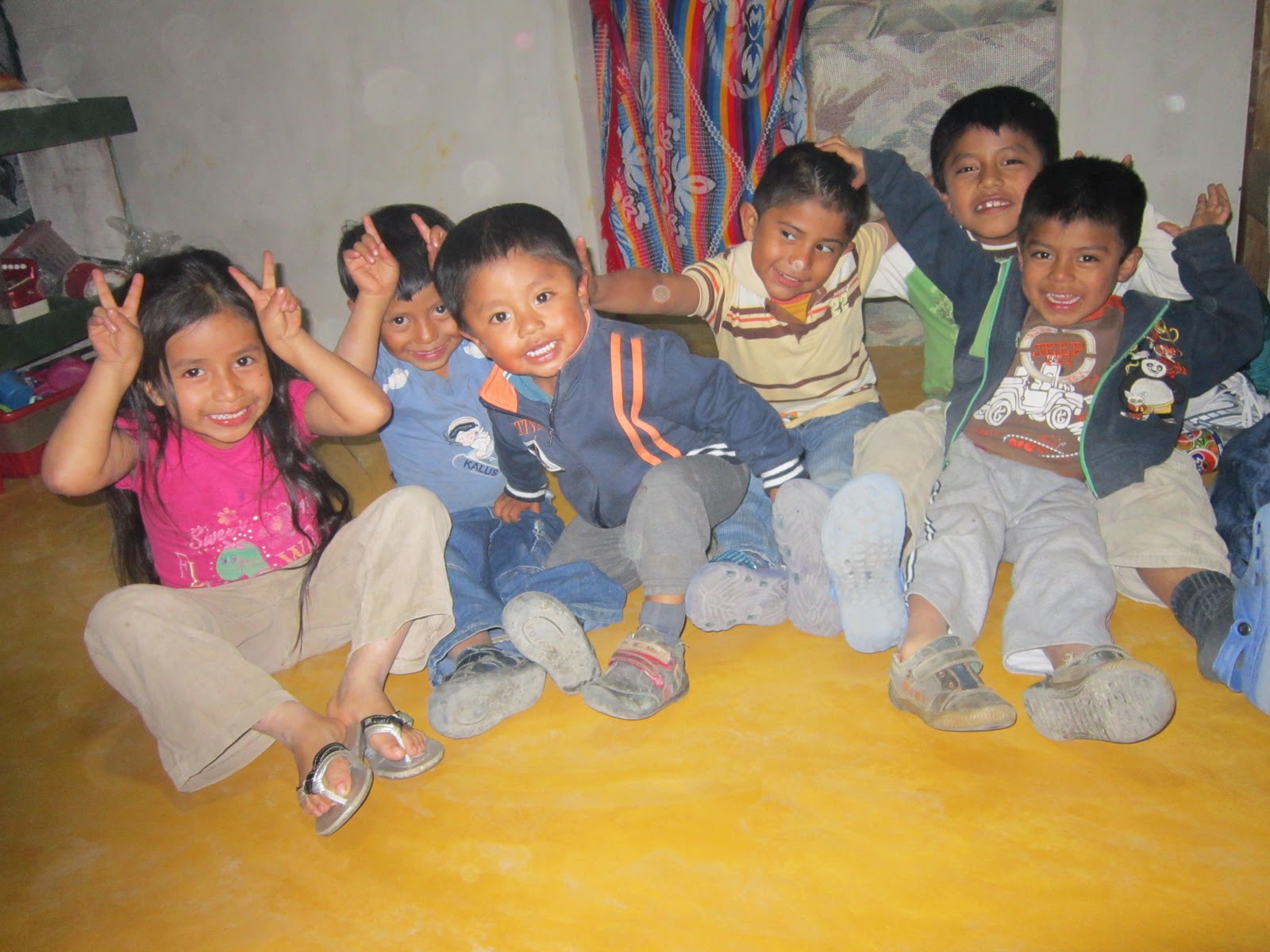
            We headed back to Oxchuc around 5:00 (tseltal time=1 hour behind) and returned to Elena’s house. Her family was so generous during my stay – her husband heated water for me in a bucket so that I could shower with hot water. They also fed me copious amounts of delicious Mexican food and coffee that Elena’s father had grown. Wednesday night, I reviewed the surveys to make sure they were complete and organized the survey packets for the following day. I was (happily) was distracted by Elena’s two little girls and their friends who came into my room and (after they saw my camera) started shouting “foto!” “foto!”. I now have lots of pictures of cute little Mexican children.

Elena's daughter (left) and her friends

            On Friday, Elena and I woke up at 7:00 again and got in a car that would take us to Mesbiljá. After we had finished surveying families in the morning, Elena and I went to go look for the families who had missing information (i.e. in some cases we still needed to interview a woman’s husband). The houses in Mesbilja are very far away from each other and while looking for specific families, we had to asked people who passed by where they lived. In most cases, it took almost half an hour to reach the family’s house. While walking around Mesbiljá, I couldn’t help but think about how difficult it must be for these families to access any kind of health care. The houses are very spread out, and the paths to and from many of the homes are narrow, rocky, and steep (i.e. not something a very sick person could do on their own). Most homes are at least a half hour walk from the Centro de Salud, and are even farther away from the hospital in Oxchuc or Ocosingo.

Elena administering my survey to one of the husbands

            By the end of the day on Friday, Elena and I had surveyed almost half of the families from the list of 60 families in Mesbiljá. We will need to return to Mesbiljá to finish surveying the other 30 families, and then do our field work in Tzopiljá. Until then, I am going to relax and spend time with my boyfriend who is coming to visit next week!


martes, 25 de octubre de 2011

Week 7: Mi casa es tu casa :-)

This past week, things at ECOSUR moved very slowly. I was hoping that I would find out the communities where I would work and that I would be able to go and ask permission to conduct my study. However, Dr. Ochoa did not return from Mexico City until Wednesday, and when he reviewed my survey he told me that I needed to pilot test again with the changes that he had made. I also did not find out from Dr. Ochoa what communities I would be working in until the end of the week, and there was some confusion about who would travel with me to translate my survey into the indigenous tseltsal language (Elena, the translator, told me that ECOSUR was not going to pay her what she needed). However, I continued working on my research project. On Tuesday morning, I went to the Secretaría de Salud to meet with a woman who works in the reproductive health office. She gave me some helpful information and now my survey is based off the information that pregnant women receive about risk signs and complications during pregnancy, birth, and the postpartum period. I also had time this week to start writing the background section and the literature review for my thesis.
Near our apartment

On Wednesday, Dr. Ochoa returned from Mexico City and I gave him a final copy of my quantitative survey. I met with Dr. Ochoa, Rosario, Roberto Solís and Elena about my research project. Dr. Ochoa talked with Roberto Solís about which communities I should work in. We also discussed how I would calculate my sample size. Because part of my survey will be given to only women (a section on obstetric history, a section on knowledge of risk signs and complications, and a section for pregnant women) and another part of my study will be given to women AND men (attitudes and practices with regards to complications), it has been somewhat challenging to calculate sample size. I am also worried that since my survey is now very long (and I will only be working with one translator walking from house to house in each community), I won’t have time to survey an adequate number of people for my analysis. Hopefully it will all work out.

This week there was a giant tent set up in the main square with a concert stage in the presidential plaza. After salsa class on Wednesday night, I went to see what was going on in the tent. There were lots of ecotourism agencies from different indigenous areas of Chiapas and other states in Mexico, including Oaxaca, Veracruz and Michoacan. I also went to listen to the concert going on across the street from the tent. There was a group singing in tsotsil, one of the indigenous languages in Chiapas.


On Thursday and Friday, the logistics of my research project finally started coming together. Rosario told me that on Monday, I will go with Elena to pilot test my survey in a municipality near San Cristóbal called Oxchuc. On Tuesday, Elena and I will go to two indigenous communities (Mesbiljá and Tzopiljá) where I will ask permission to conduct my research study. ECOSUR conducted a trachoma study in these communities in 2007, and Roberto Solís has a list of the families that were randomly surveyed. Dr. Ochoa explained that it may be easier to bring this list with me on Tuesday and ask the community leaders if it would be possible to survey the same families. On Wednesday and Thursday (if the communities agree to participate), I will hopefully be able to start my field work. Because Elena will not be available to translate again until the third week in November (she is also translating for another project), I am hoping I will be able to make some progress on my field work next week.

Thursday night, Rahul and I met our friend Paco and went to a birthday party for one of the secretaries that works at ECOSUR (there is always a birthday around here!). We chatted with some of the other people from ECOSUR and after a few hours, the salsa dancing started. When I return to the states in December, I am really going to miss the festivity that is ever-present in Mexico.

Rahul waiting for Ronni to meet us at the bus stop

This past weekend, Rahul and I went with Ronni (one of the nutrition students at ECOSUR) to his hometown of Ocosingo. On Saturday morning after a night filled with salsa dancing, I woke up and Rahul and I went to the bus station to meet Ronni and his friends. It was a beautiful day and after stopping for some breakfast, we drove to Ocosingo, which was about a two-hour drive northeast through the mountains.

I achieved my goal of riding in the back of a pick-up truck :-)

We arrived in the late afternoon and walked around the town of Ocosingo. On January 1, 1994, Ocosingo was occupied by the EZLN (Ejército Zapatista de Liberación Nacional). Not coincidentally, January 1, 1994 was the day when the North American Free Trade Agreement (NAFTA) came into effect. The Zapatistas wanted to call the world’s attention to protest the signing of NAFTA, which the EZLN believed would increase the inequality gap among people in Chiapas. The Zapatistas wanted the natural resources that were extracted from Chiapas to benefit the people of Chiapas in a more direct way and also desired autonomy from Mexico. When the Mexican army arrived in Ocosingo, the Zapatistas did not retreat and there was a lot of fighting. Ronni says that he remembers (as a 7-year-old boy) that everyone was afraid for their lives that day. Today, however, Ocosingo seems like a peaceful place with a small-town feel.

Driving to the ruins on Sunday in Ocosingo

On Saturday night, Rahul and I went to dinner with on of Ronni’s friends, Daniel. He is a middle-school teacher in a community outside of Ocosingo near the jungle. Later that night, we met some more of Ronni’s friends. One of them told us that we were the first gringos that he had ever talked to. On Sunday, we went to a Mayan archaeological site called Toniná with one of Ronni’s friends, Daniel. Me and Rahul rode in the back of the pick-up truck (one of my goal’s since coming to Mexico) as we drove through the beautiful landscape to the archeological site. When we arrived, we perused the small museum and then walked the path towards the ruins. It was a very hot day, but we climbed the stairs to the top of the ruins. The Mayans definitely picked a good spot – the view from the top of the ruins was incredible. After descending the steps, we got back in Daniel’s truck and drove to a nearby river, where families were picnicking and boys were swimming in the freezing water. We got some empanadas from a local food stand and walked along the river. Before heading back to San Cristóbal, we ate some food that Ronni’s mother had prepared for us. When we said goodbye, she said “mi casa es tu casa” and assured us that whenever we wanted to return to Ocosingo, we would have a place to stay :-)

Me with Ronni (right) and his friend Daniel (left) at the ruins of Toniná

Me and Rahul at the ruins of Toniná

viernes, 14 de octubre de 2011

Week 6: Always something to celebrate


Last weekend, Rahul and I rested and recovered from our first fieldwork adventure. On Saturday, we went out salsa dancing with Milton (I taught both Milton and Rahul some of the steps I have been learning in my salsa class). On Sunday, I revised my quantitative survey on the knowledge, attitudes, and practices with respect to risk signs and complications during pregnancy, birth, and the postpartum period. I also spent four hours in the Telcel Customer Service office trying to get my internet device (banda ancha) fixed. Despite being told to return to the Telcel office on Monday and Tuesday, they were unfortunately unable to fix it.

Home sweet home (our apartment is on the left right before the stairs)

On Monday, I met with Dr. Ochoa and Rosario about my research project. Dr. Ochoa suggested that I carry out my study in two indigenous communities in Los Altos, where ECOSUR conducted a trachoma study a few months ago. Next week, I will hopefully go to these communities to ask permission to do my research study. First, I need to discuss with Dr. Ochoa which communities I should choose: he suggested that I pick a variable to distinguish the two communities. I am considering working in one community that has a Centro de Salud (Health Center) close by, and one community that is far away from a Centro de Salud clinic. This variable may be correlated to the level of knowledge in the community with respect to risk signs and complications.

Map of the state of Chiapas and all of the different indigenous languages

On Tuesday, I finished revising my quantitative survey and arranged an interview with a woman who works with the Oportunidades poverty alleviation program at the Secretaría de Salud (Secretary of Health) in the capital of Chiapas, Tuxtla Gutiérrrez. I created an interview guide with the help of Enrique Eroza, which consisted of questions such as “what information do you think women need to have in order to have a healthy pregnancy”, “why do you think maternal mortality is higher in Chiapas than in other states in Mexico”, and “do you think the Oportunidades program has improved maternal health in Chiapas”. I was also hoping that the woman could help me find more specific information beneficiaries of Oportunidades receive about risk signs during pregnancy. Later in the day on Tuesday, I was told by Esmerelda’s husband that I should not travel to Tuxtla on Wednesday (as I had planned) because there was going to be a roadblock.

I love all the grafiti here...

On Wednesday, I met with Esmerelda and Elena (the translator at ECOSUR) to review my survey (again). Because many of the people in the communities where I will conduct my study only speak tseltal (different from tsotsil), Elena will need to translate my survey. After reviewing my survey (at around 1:00 p.m.), Esmerelda suggested that in factI should travel to Tuxtla Gutiérrez to meet with the woman at the Secretaría de Salud because she had heard that the road to Tuxtla was not, in fact, blocked. I quickly hopped in a cab and then got in a minibus towards Tuxtla. The ride was about an hour from San Cristóbal into the mountains, and I felt the climate change as we descended in altitude. After arriving in Tuxtla, I took a cab to the Secretaría de Salud building and found the Oportunidades office. I asked for the woman and someone directed me towards her desk. She was very helpful and gave me a health promotion book entitled “Cuaderno de la salud para madres de familia” (Health Notebook for Mothers) that had chapters explaining different health topics (including Pregnancy, Birth, and Postpartum). Unfortunately, the woman did not have any of the health promotion books I had found when we went to the Centro de Salud in Ramos Cubilete last week (with more specific information about risk signs during pregnancy/birth/postpartum), but she said that the Jurisdicción Sanitaria (Health Jurisdiction) in San Cristóbal might have this information.

Outside the Secretaría de Salud in Tuxtla (notice the palm trees)

I conducted my interview with another woman from the Oportunidades program, which lasted about half an hour. Unfortunately, there was a lot of noise in the background (phones ringing, people interrupting us, etc.) and the woman spoke very softly and quickly, so I had some trouble understanding all of her answers in Spanish. I recorded the interview so hopefully I will be able to get some help with the transcription process. After I finished the interview, I left the Secretaría de Salud and went to go find a café. No luck. Tuxtla reminds me a little bit of Los Angeles: it is incredibly spread out and you can’t really walk anywhere (no offense to people from Los Angeles). Being in Tuxtla makes me very glad that I am living in San Cristóbal, where there are cafés with wi-fi and you can walk almost anywhere. I finally hopped in a cab to the bus station where I could find a minibus back to San Cristóbal. I arrived back in San Cristóbal just in time for salsa class at Zirko :-)

This is what it looks like when you drive around Chiapas
(yeah I stole this from Google images)

On Thursday, I went to ECOSUR and worked on transcribing the interview I had conducted the day before. I also started to think about my sampling methodology, and looked for other similar KAP (knowledge, attitudes, and practices) studies in Chiapas. Next week when Dr. Ochoa returns from Mexico City, I will hopefully be able to get more advice from him about my study sample and begin to move forward with my fieldwork. I am starting to get anxious about starting my fieldwork because I know that I still have a lot of work ahead of me!

Friday morning I met Milton and he accompanied me to the Jurisdicción Sanitaria in San Cristóbal. We passed a lot of people in the street marching with signs. One man handed me a flyer that explained the “Marcha por la dignidad y respeto al trabajo”. Apparently, there has been no response from government authorities to allow hundreds of people to obtain a decent workplace in Zona Norte, a public market facility that was completed more than a year ago. The people marching were opposed to the privatization of public markets and wanted the state government to respect their right to work. Milton and I passed hundreds of people walking in the street and walked into the Jurisdicción Sanitaria, and I asked where I could find health education materials with information for pregnant women about risks signs and complications during pregnancy, birth, and the postpartum period. I was directed towards a woman named Beatriz Vera, who coordinates the reproductive health department. We arranged a meeting on Tuesday, so hopefully I will be able to get some helpful information for my survey.

Milton and I took a convi back to ECOSUR and passed his high school on the way. He mentioned that when he is done with his year of Servicio Social (Social Service) at ECOSUR, he wants to try to find work as a nutritionist at the Jurisdicción Sanitaria. Sounds like it is just as hard, if not harder, for recent graduates to find work in Mexico. Later in the day at ECOSUR, we celebrated the birthday of one of the ECOSUR secretaries (Carmelita) with a cake and popcorn. I love how despite the constant rain, there is always something to celebrate here in Mexico :-)

Carmelita cutting her cake :-)